Draft in the author’s style. This poem was written for Poet of Bedtime Hush to sit beside the author’s own readings, and is waiting for the author’s review. The commentary is a working draft too.
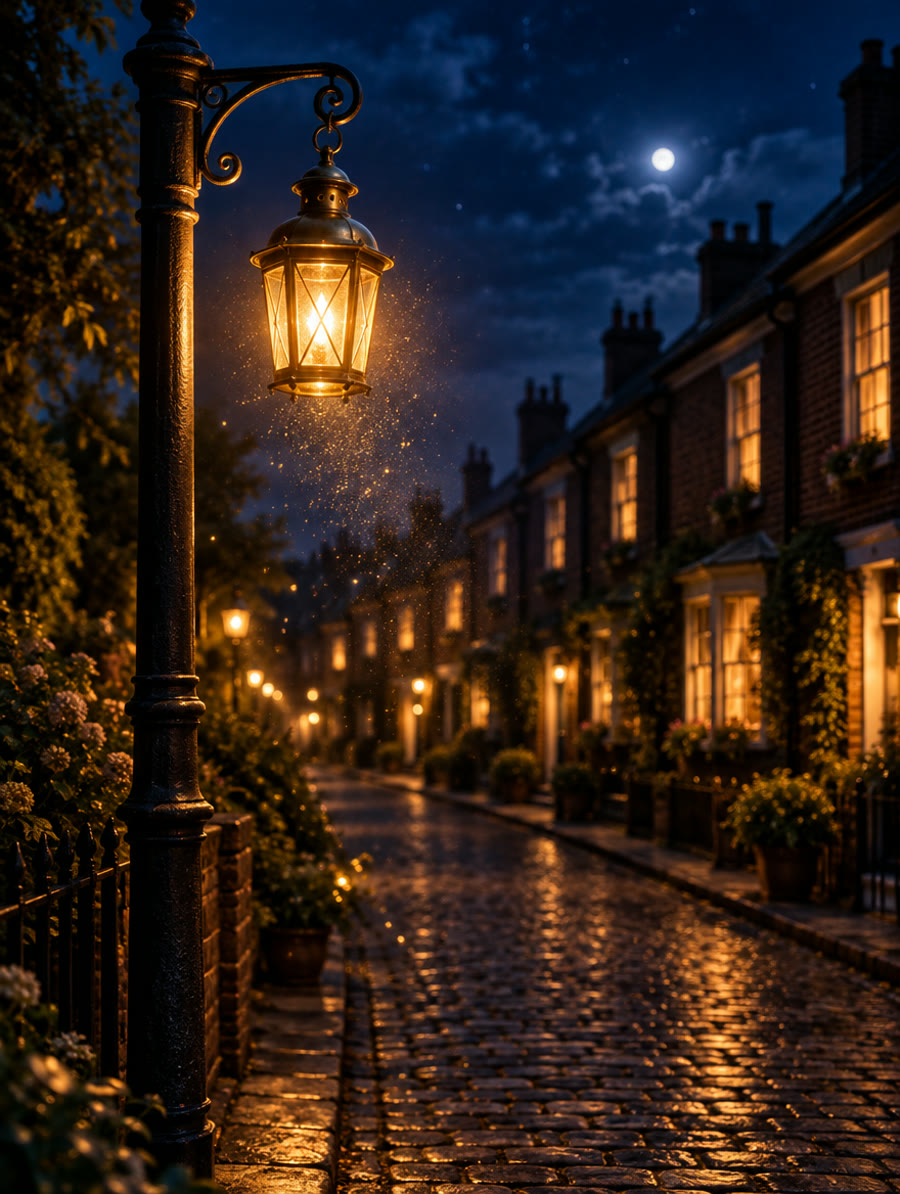
At the edge of every evening, where the daylight starts to fade,
The Sandman walks the quiet streets with a lantern he has made.
It burns with no flame at all, but a gentle, golden dust,
That he scatters on the eyelids of all the trusting and the just.
He tiptoes past the sleeping cats and up the window sill,
And whispers to the tired ones to be calm and be still.
He listens for the restless who are tossing in their beds,
And pours a pinch of stardust on the tops of weary heads.
For the child who fears the thunder, he brings a drumbeat's lull,
And for the grown-up worn with work, he leaves a dream that's full.
When the lantern burns low and the rooster starts to crow,
He hangs it on the morning star and heads for home below.
So if you feel a tingle as your eyelids start to sink,
It's the Sandman's golden lantern, and it's time to stop and think.
Poet of Bedtime Hush · Hear it on the channel ↗
Commentary
The Sandman is an old bedtime figure who brings sleep. This poem gives him a lantern that burns golden dust and a fair heart for everyone, from children to tired adults.
At “the edge of every evening,” the Sandman walks “the quiet streets” with “a lantern he has made.” It burns “no flame at all, but a gentle, golden dust” that he scatters “on the eyelids of all the trusting and the just.” He tiptoes “past the sleeping cats” and “up the window sill.”
He listens “for the restless” and pours “a pinch of stardust on the tops of weary heads.” The frightened child gets “a drumbeat’s lull” and the worn-out worker gets “a dream that’s full.” At dawn he hangs the lantern “on the morning star,” and the poem ends with the reader’s own “tingle” of sleep.