Preview edition — Poet in the Battlefield is still in progress. The poem is as it appears in the video; the commentary is a working draft.
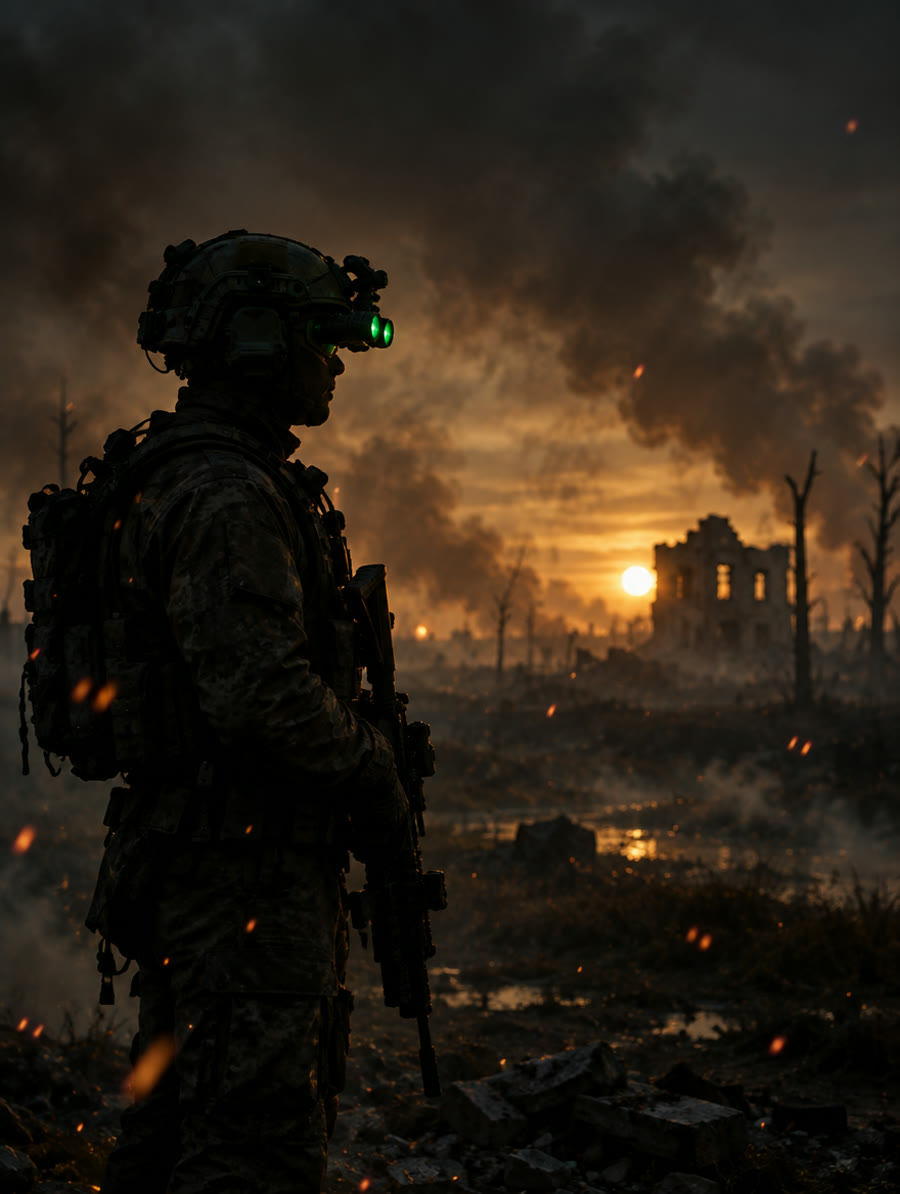
Alone, I woke up a lone soldier in an ended battlefield
Life's grace poured on my face without death's trace amidst the red field
The explosion hit me feintly to a faint that I thought ain't surviving
But now believing, for to be counted among the living was worth perceiving
Blinded by the sight of the awakening night, I wondered who won the day's fight
Wearing a google of night vision, no time for confusion I moved with immediate decision
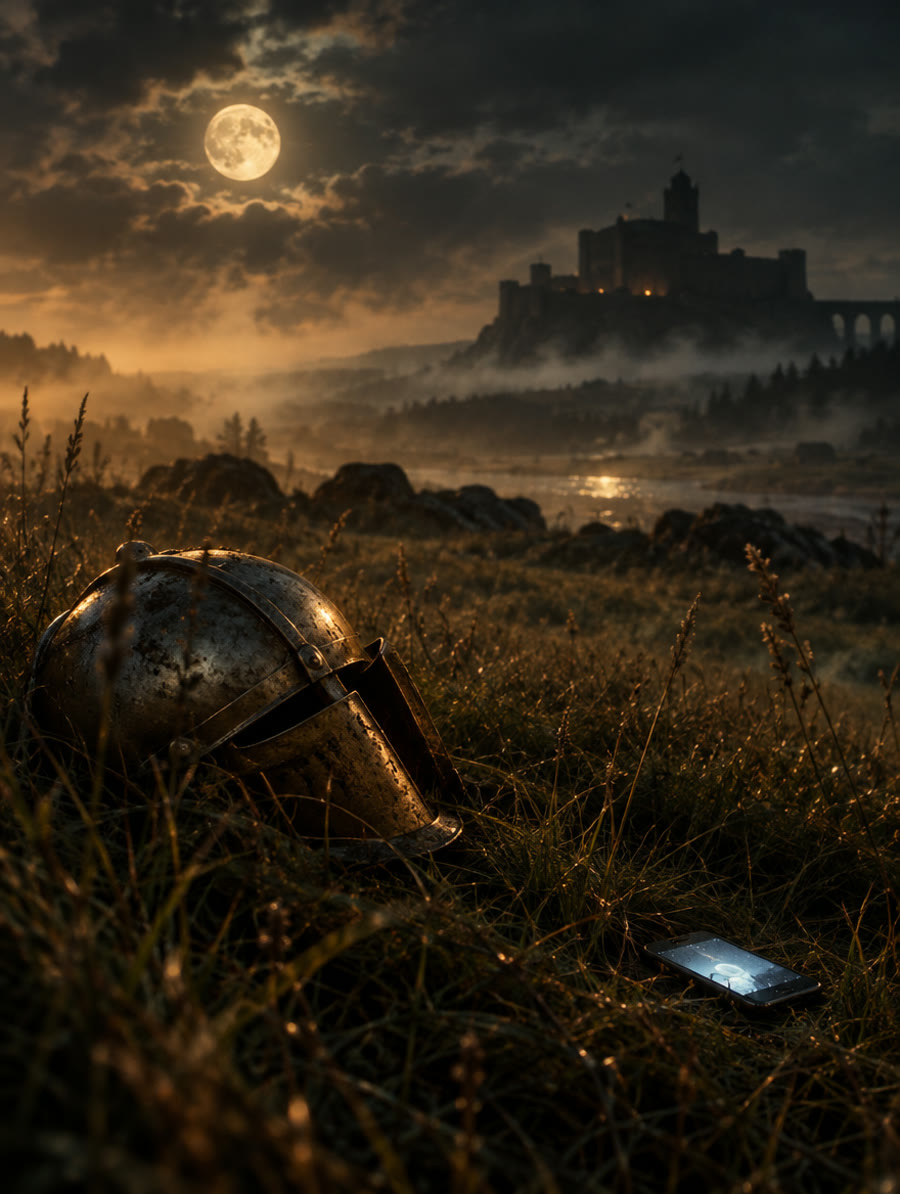
Silently, I walked through shadows of fallen brave-hearted comrades across the meadow
Through the lens and guns aimed with defense, there came figures without offense across a camped fence
They were enemies with capes, bleeding, pleading and kneeling to escape
There was no time to wrestle with the conscious of righteousness or listen to an owl nearby hooting to shoot
For in darkness depth, mercy found me so may they go, no need been a foe
Nearing the fortress alone, being alive will make my fellows cheer and bring smiles to my family on telephone
Poet in the Battlefield · Hear it on the channel ↗
Commentary
This poem follows a soldier who wakes alone on a field where the fighting is already over. Rhymed in quick pairs and triples, it moves from shock to survival to mercy, and ends with the thought of a phone call home.
The speaker wakes “a lone soldier in an ended battlefield,” with “Life’s grace” on their face and “the red field” all around. An explosion has knocked them into “a faint,” and being “counted among the living” now feels “worth perceiving.”
Wearing “a google of night vision,” the speaker moves “with immediate decision,” walking past “fallen brave-hearted comrades.” Through the lens come “figures without offense,” enemies who are “bleeding, pleading and kneeling to escape.”
With “no time to wrestle with the conscious of righteousness,” the speaker lets them go: “mercy found me so may they go, no need been a foe.” The poem ends in quiet hope, “nearing the fortress alone” and picturing “smiles to my family on telephone.”