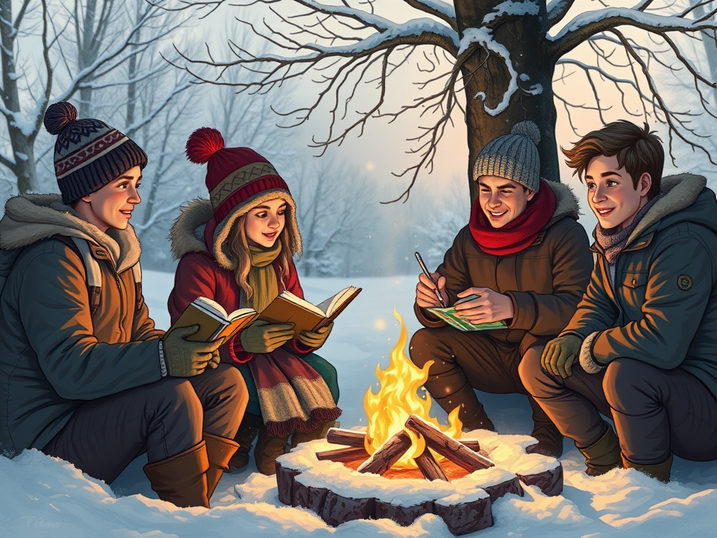
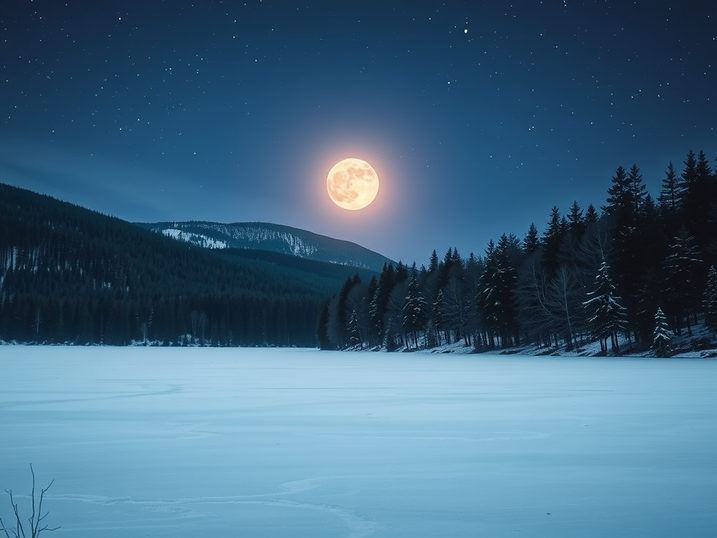
The lake stretched wide, cold and deep,
snow-laced winds began to creep.
Cabins hummed with fire’s brace,
yet whispers moved beneath the space.
"Welcome campers, settle in,"
the caretaker spoke, face too thin.
"The lake is frozen, still and wide,
but don’t stray far when moonlight rides."
We laughed it off, tossed our gear,
We traded stories and we were full of cheer.
Theo skated fast and his arms spread free,
Elena carved snowflakes near a tree.
Marcus grinned and built the fire,
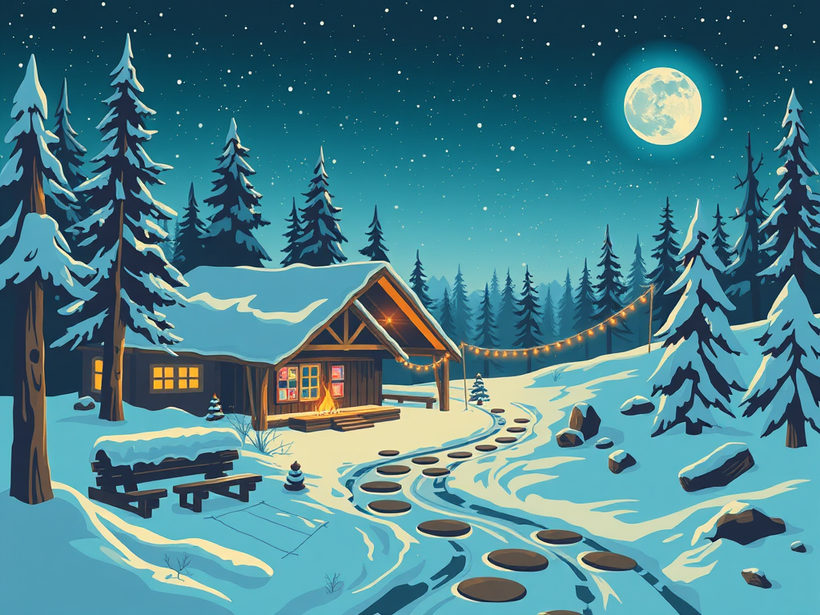
his breath alive, his heart inspired.
Then night drew close and the winds ran high,
the trees bent low, the fire sighed.
I stepped out, breath curling white,
seeking stillness, chasing night.
Beyond the lake, past frozen trails,
a shape moved slow, its shadow pale.
"Who’s there?" I called, voice stretched thin,
but only echoes answered in.
Then a hand so long, quiet, cold,
reaching out from the frost untold.
A face, too blurred, too lost in snow,
a voice that whispered soft and low:
"You’ve come too late, you’ve come too far,
Join the lake and keeps its scars."
I ran, tripped and the ice gave way,
but friendly hands caught mine, pulled me away.
Elena stood, her grip on my jacket so tight,
While Theo and Marcus raced from sight.
"It’s just the wind," Marcus swore,
"Nothing lingers, not anymore."
But I saw the lake and its surface bare,
and footprints lead to nowhere there.
Snow fell thick, the night ran deep,
but something here did never sleep.
And as the dawn broke clear and bright,
Camp Chill Hollow smiled, but never right.
Poet of the Winter · page 56 · Hear it on the channel ↗
Commentary
This poem masterfully blends winter’s serene beauty with a creeping sense of mystery, creating an immersive, story-like experience. Through rhythmic storytelling, it follows a group of campers who embrace the warmth and adventure of their seasonal retreat—only to stumble upon something chilling beneath the surface.
The poem opens with snow-laced winds creeping and cabins humming with fire’s brace, immediately establishing a contrast between warmth and cold. The setting feels welcoming yet subtly haunted, as whispers move beneath the space—hinting at something lurking beyond the cheerful camp atmosphere.
The campers arrive with excitement, tossing their gear, sharing stories, and embracing the winter fun. Theo skates freely, Elena carves snowflakes, and Marcus builds the fire each character contributing to the cozy energy that precedes the suspense.
However, as night falls, winter shifts in tone. The winds run high, trees bend low, and the fire sighs, signaling an unease creeping into the landscape. The narrator steps outside, drawn by the stillness, seeking solitude—but what he finds is something far beyond peaceful.
Beyond the frozen trails, a shadow moves, a figure emerges, distant yet tangible. The exchange is brief but ominous—a voice, soft yet commanding, warns that it’s too late, too far, and the lake keeps its scars. The phrasing implies that the lake has claimed others before, turning their presence into something eternal, perhaps lost in frost.
Panic sets in, and the narrator runs, trips, the ice gives way—but at the last moment, friendly hands pull him back to safety. Elena, Theo, and Marcus react with concern, yet Marcus dismisses the fear, reassuring everyone that “Nothing lingers, not anymore.”
But as the dawn breaks, the final revelation leaves lingering doubt—the lake remains bare, its footprints leading nowhere, suggesting that what they encountered was not imagined. The poem closes with a haunting paradox: Camp Chill Hollow smiles, but never right, cementing the idea that something within it is deeply unnatural.