Every great story which gives joy to man’s yearning, kindles the heart whether the weather is cold or hot.
As it was this chilled week, I did seek meekly, to reminisce on the birth of Christ from the chapters of events which unfold.
The old prophets of the testaments foretold that through him would be testimony and epiphany to many with a joy to behold.
Marveled in imagination with an ambience of calmness, I sat in meditation and took notes of the quotations.
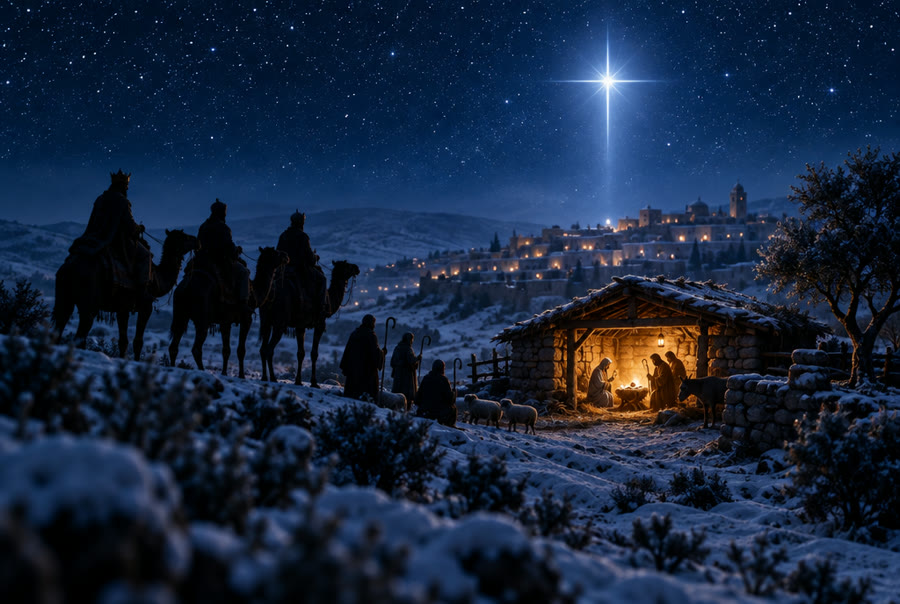
In depth of imagination as a time-traveller, I adored the serenity of the scene sincerely at Bethlehem charged with an atmosphere of jubilation.
Hail to the Son of Righteousness whom the angels glorify and sent Word for the shepherds to wonder and demystify.
Oh, What Joy to Behold!!!
For the King of kings had come keenly to bring redemption for us to live.
Guided by His star, wise men from afar had come to worship Him with gifts to give.
Oh, What Joy to Behold!!!
For a Royal Priest had come to intercede for us and present himself as a sacrifice for sin’s earnings.
A Risen Saviour who would give life a new meaning and a joy to man’s yearning.
Poet of the Winter · page 19 · Hear it on the channel ↗
Commentary
This poem is a heartfelt celebration of the birth of Christ, blending spiritual reflection with poetic storytelling. Through vivid imagery and reverent language, it captures the wonder, prophecy, and profound joy surrounding the nativity. Below is a detailed analysis of its structure, themes, and literary devices.
The poem begins with a universal truth—that great stories kindle joy, regardless of circumstance. The speaker embarks on a meditative journey, reminiscing on Christ's birth by revisiting biblical events. The prophets foretold His coming, and now, in reflection, the speaker imagines witnessing Bethlehem’s jubilation firsthand. The angels glorify Him, shepherds marvel at the divine revelation, and wise men travel from afar, guided by the celestial sign. The recurring exclamation—"Oh, What Joy to Behold!!!"—reinforces the overwhelming sense of awe. The poem culminates in acknowledging Christ as the Royal Priest and Risen Saviour, whose sacrifice redefines existence and fulfills humanity’s deepest yearning for salvation.