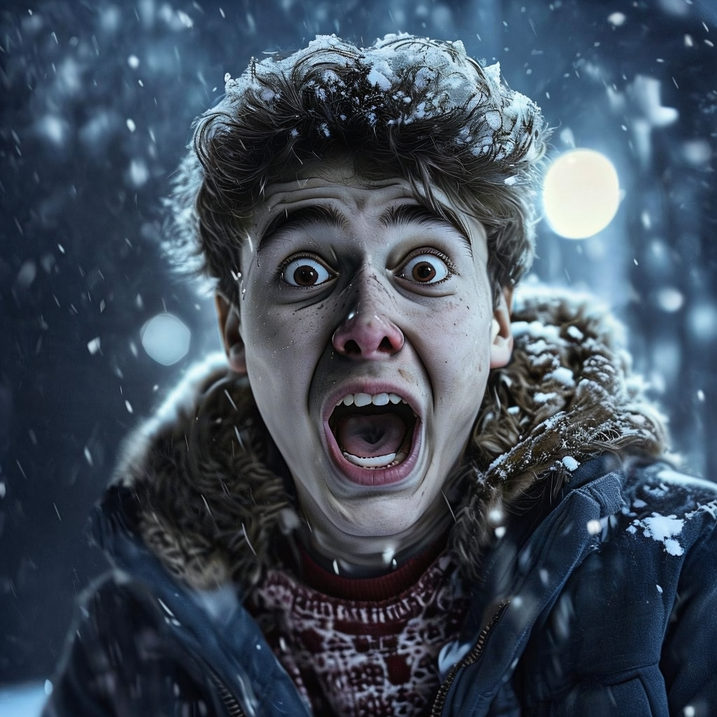
The wind whistled but was it the trees?
The night was still yet I felt a breeze.
I walked alone in the silent snow, where silence sow what shadows know.
Footsteps crunched, but mine stood still, a voice chilled low, deep, shrill.
Perhaps it was those frost bamboo trees, Moonlight cracked like a fractured glass,
revealing a shape that did not pass.
Eyes like embers in a snowy shroud,
figures frozen, standing proud.
Was it a statue? A trick? A dream?
Or something darker than it seemed?
I turned, too late, my breath suspended,
chilled to the veins, fear extended.
The shape moved, its voice unfolded,
shivering syllables, ancient, coded.
It got to be those statues, it got to be!
I ran, I slid, the ground betrayed me, the winter’s grip, my steps delayed me.
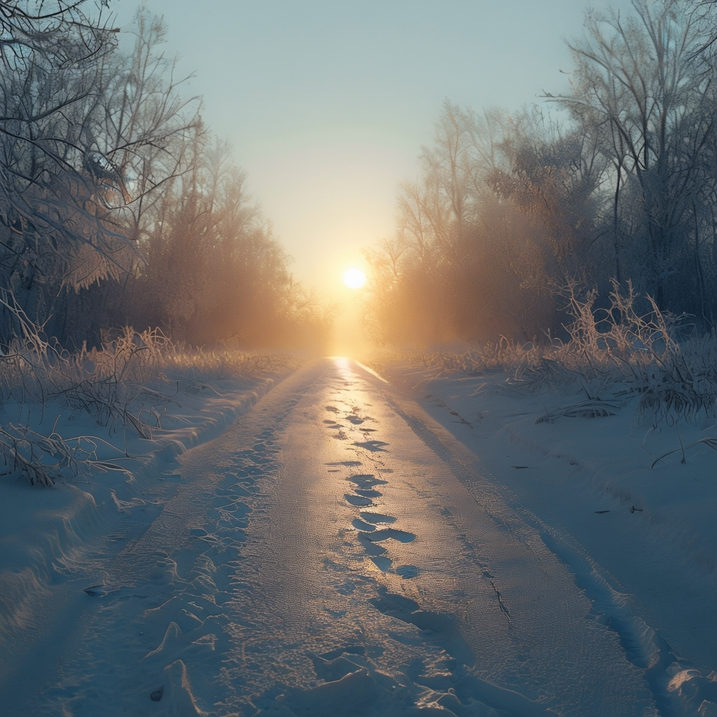
A laughing wind was a dreadful wail, As the sun gently rose and the path was clear and glowed.
there was nothing but just footprints left where terror flowed.
Did I escape? Was it real?
Certainly, It was my coldest jumpscare.
Poet of the Winter · page 37 · Hear it on the channel ↗
Commentary
This poem is a chilling, suspenseful narrative that captures the essence of psychological horror in a winter setting. It follows a male speaker who experiences an unsettling confrontation with an unknown presence, blending eerie imagery with rhythmic storytelling.
The poem begins with the speaker walking alone on a quiet, snow-covered night. Though the night is still, he feels a mysterious breeze—hinting that something unnatural lurks nearby. As he moves through the silent snowfall, footsteps crunch, but his own remain still, suggesting a presence beyond his control.
Moonlight cracks like fractured glass, revealing a figure that does not pass, seemingly frozen yet watching. Its eyes like embers in a snowy shroud evoke an unsettling contrast between warmth and cold, adding an element of supernatural fear. He wonders—could it be a statue? A trick? Or something far more sinister?
Terror intensifies as the shape moves and speaks in shivering syllables, ancient, colded— suggesting an entity beyond time. He tries to reason with himself, insisting it must be statues, but panic soon takes over. He runs, but the winter betrays him—the icy ground slows his escape, making him vulnerable.
The final lines bring uncertainty. The sun rises, the path clears, and only footprints remain. Did he truly encounter something supernatural? Or was it his mind playing tricks? The poem leaves the question open, allowing fear to linger beyond the moment.